Custom Wood Deck Builder in the Flathead Valley
A real wood deck, built the Montana way: fir and larch lumber, flashing on every joist and beam top, and footings below the frost line. Wood done right — not wood done cheap.
The Lumber Most Crews Use Is the Problem
Walk any lumber yard around here and you'll see stacks of pressure-treated pine. It's cheap, it's everywhere, and it's what most deck crews build with by default.
We don't. Pressure-treated pine is weaker, and it warps badly in our freeze-thaw cycles. As Josiah puts it: it's weaker, "and the flashing we do on all the tops of the joists and beams lasts longer anyways."
So we build wood decks with fir and larch — stronger species that hold their shape in this climate — and we flash the framing so water never gets the chance to start the rot clock in the first place.

What Goes Into Every Wood Deck We Build
Flashing on Every Joist & Beam Top
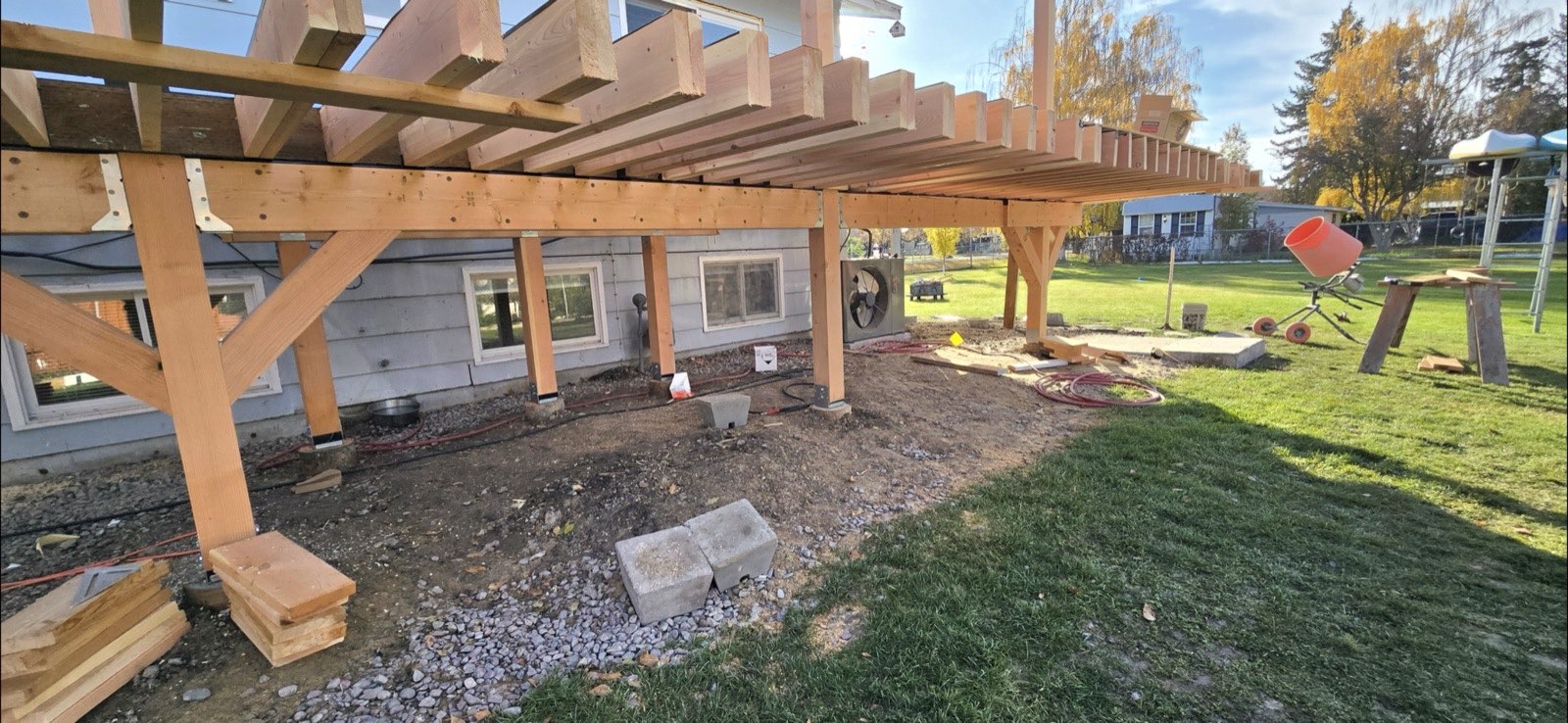
Wood decks rot from the top of the framing down, where water sits. We flash all the tops of the joists and beams on every build, so the structure sheds water instead of soaking it up.
Footings Below the Frost Line
Our frost line demands footings at least 3 feet deep. Shallower than that and frost heave will shift your deck a little more every winter — we've torn out the results.
Structural Hardware Throughout
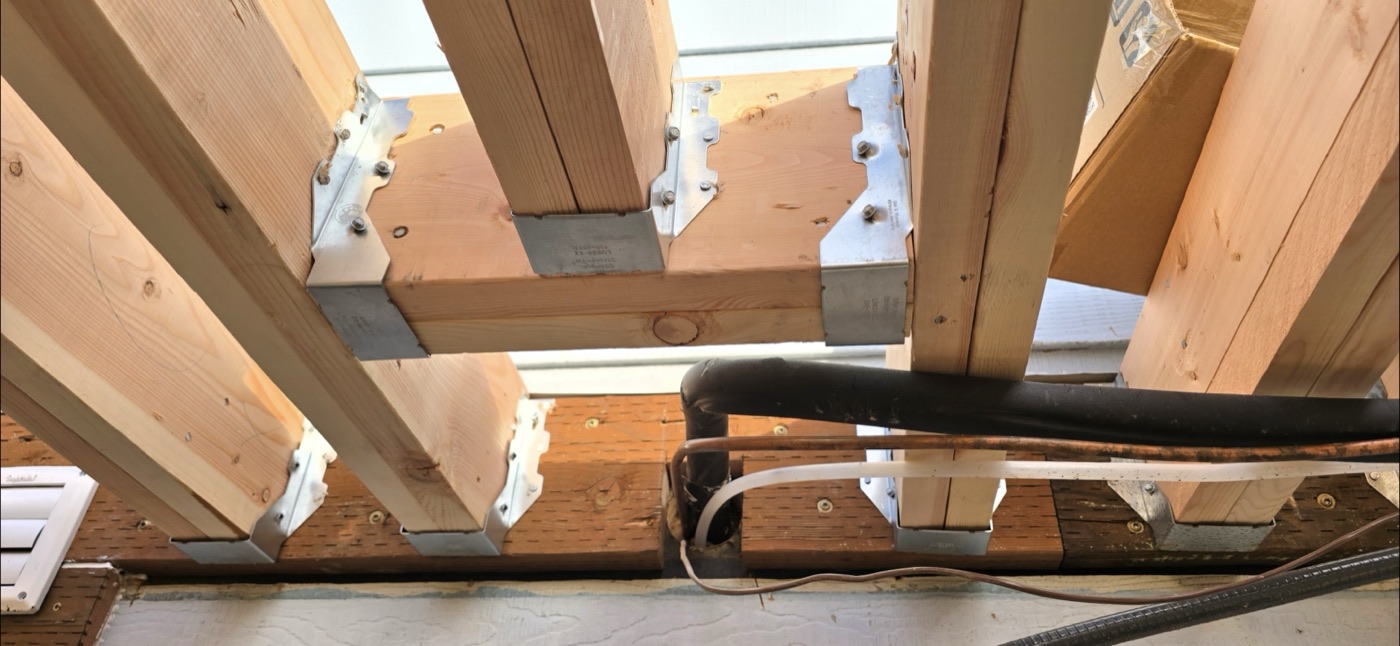
Screws alone have near-zero shear strength. We hang and tie the frame with rated structural hardware built to carry snow load, not just hold boards in place on a sunny day.
Wood vs. Composite: An Honest Take
We're the valley's TrexPro Platinum composite builder, so believe us — we have no reason to undersell composite. But wood is still the right call for plenty of homeowners:
- Budget — composite materials alone often run $20,000 or more. A quality wood build keeps the total lower without cutting the structure.
- The traditional look — some homes, especially timber and cabin styles, just want real wood underfoot.
- Same bones either way — whichever surface you pick, the framing, footings, and hardware underneath get built to the same standard.
Still weighing it? We wrote out the full comparison: Composite vs. Wood Decks in Montana.
Strength You Can See in the Hardware
Pull up a board on most failed decks around here and you'll find framing held together with nothing but screws — which have almost no shear strength — and joist tops black with water damage. That's why a wood deck that looked fine at year one is wobbling by year five.
Ours look different underneath. Rated joist hangers, snow-load hardware, flashed framing. If your current deck already has those problems, our deck repair and rebuild crew will give you an honest verdict on it.
What Homeowners Ask About Wood Decks
Why fir and larch instead of pressure-treated pine?
Because pressure-treated pine is weaker and warps badly in our freeze-thaw cycles. Fir and larch are stronger and hold their shape here — and the flashing we put on all the tops of the joists and beams lasts longer anyways. Better lumber, protected framing, longer-lasting deck.
Should I go wood or composite?
Wood, if budget is the driver or you want that traditional natural look. Composite, if you never want to stain or seal again — details on our composite deck page. The structure underneath gets built identically either way. Full breakdown: Composite vs. Wood in Montana.
How do you stop a wood deck from rotting here?
Rot starts where water sits — the tops of joists and beams. We flash every one of them so the framing sheds water instead of drinking it. Add fir and larch lumber and footings below the 3-foot frost line, and the structure stays dry and stable.
What actually holds the deck together?
Rated structural hardware — joist hangers and connectors with real shear strength, sized for snow load. Screws alone have near-zero shear strength, and decks fastened with only screws are one of the most common failures we tear out.