Deck Repair, Teardown & Rebuild in the Flathead Valley
If your deck can be saved, we'll save it. If it's dangerous, we'll show you why and rebuild it the way it should have been built the first time. Either way, you get it straight.
We Tore Down a $31,000 Deck That Was Less Than a Year Old
A homeowner paid $31,000 for a deck. Under a year later, we were tearing it down. It was structurally dangerous — water damage everywhere, foundation already shifting.
When we opened it up, everything wrong with it was predictable. The footings were barely a foot deep, in a climate where they need to be at least 3 feet down to get below the frost line. It was built with soft pine, which warps like crazy in our freeze-thaw cycles. And the whole thing was fastened with nothing but screws — which have near-zero shear strength.
That's what a $31,000 mistake looks like from underneath. And it's why we'll never put a pretty new surface on a failing structure — the boards aren't the deck. The structure is the deck.
Want the full anatomy of how decks die around here? Read our guide: Why Decks Fail in Montana.
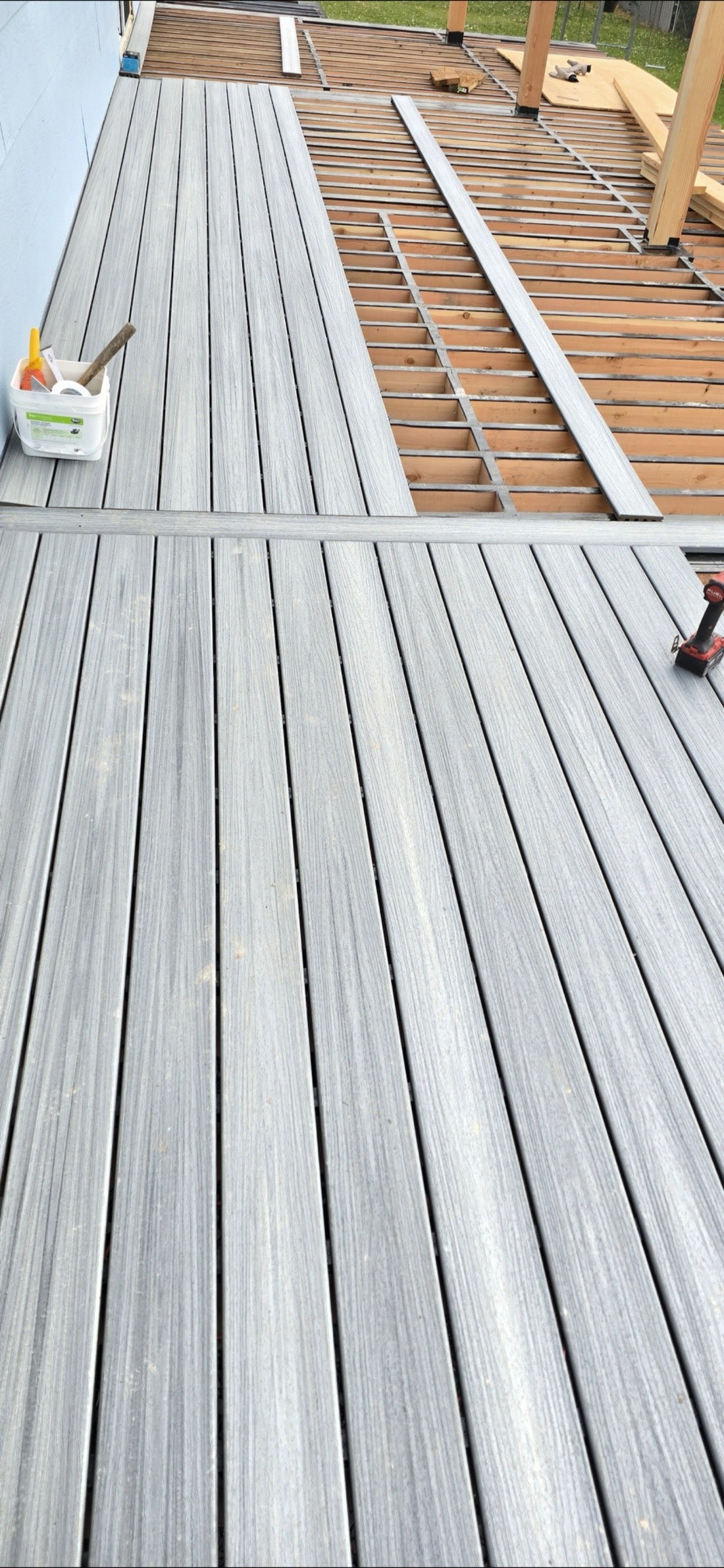
Warning Signs Your Deck Is Failing
None of these mean panic. All of them mean it's time for someone honest to take a look.
Wobble Underfoot
A solid deck doesn't move when you walk across it. Sway or bounce usually points to failing connections or footings on the move.
Soft Spots
A spongy board means water has gotten in — and what you feel on the surface usually goes deeper into the framing below.
Shifting Posts
Posts that lean or settle are the signature of shallow footings. Frost heave moves them a little more every winter.
Warping Boards
Cupped, twisted, or waving boards point to soft lumber, bad framing, or both. They don't flatten back out on their own.
Rusted Fasteners
Rust streaks and corroded hardware mean the connections holding your deck together are getting weaker every season.
Not Sure? Ask.
If something feels off about your deck, trust that instinct. A look from us costs you nothing and might save you a lot.
An Honest Verdict, Whichever Way It Goes
We look at the parts of your deck that matter: the footings, the framing, the connections, the flashing. Then we tell you the truth.
- If it's repairable, we repair it. Plenty of decks just need targeted fixes, and we'll tell you exactly which ones.
- If it's dangerous, we say so — and show you the evidence, not just an opinion. No scare tactics, no upsell theater.
- Either way, you decide with real information — what's failing, why, and what fixing it actually takes.
"As a veteran, I was trained to do things right the first time. No shortcuts. No excuses." That goes for the diagnosis as much as the build.
Rebuilt the Way It Should Have Been Built
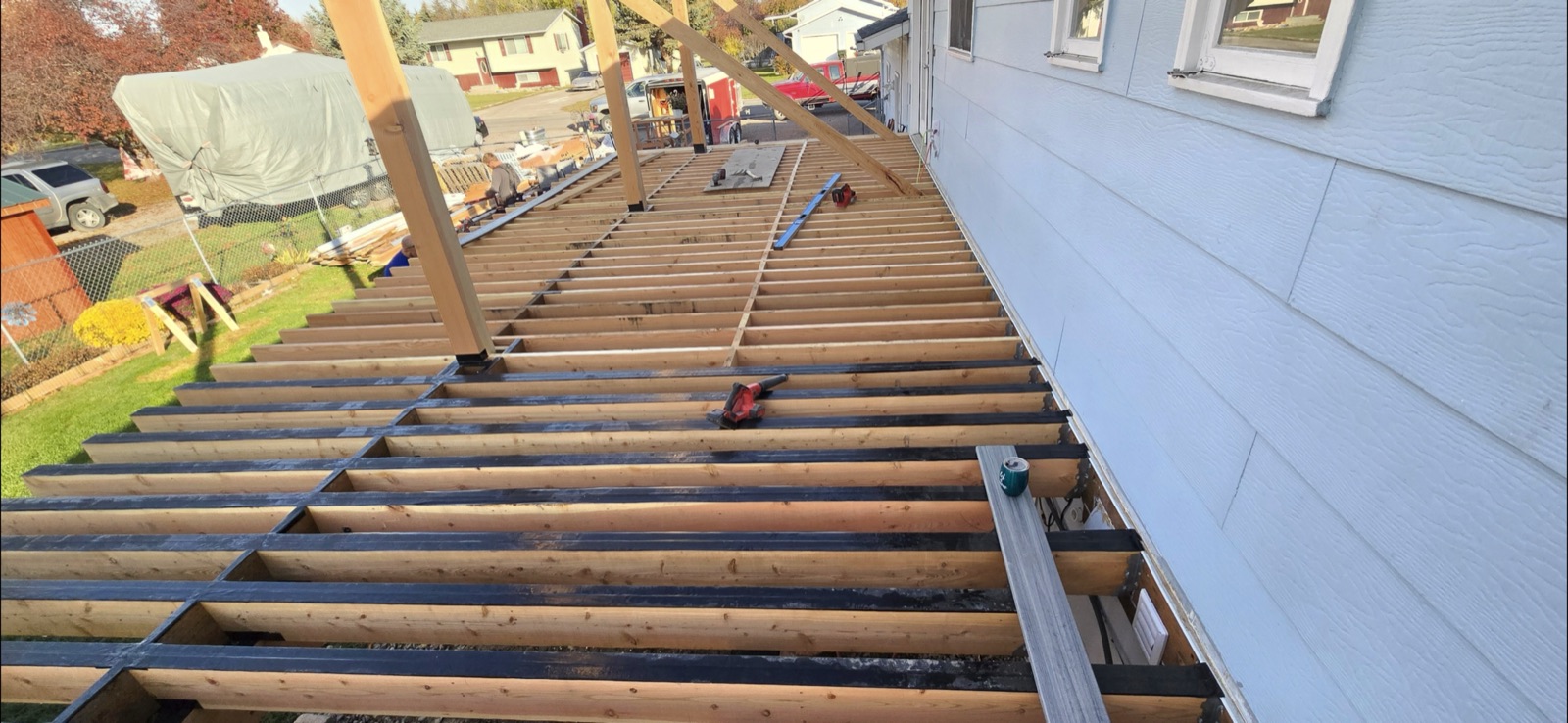
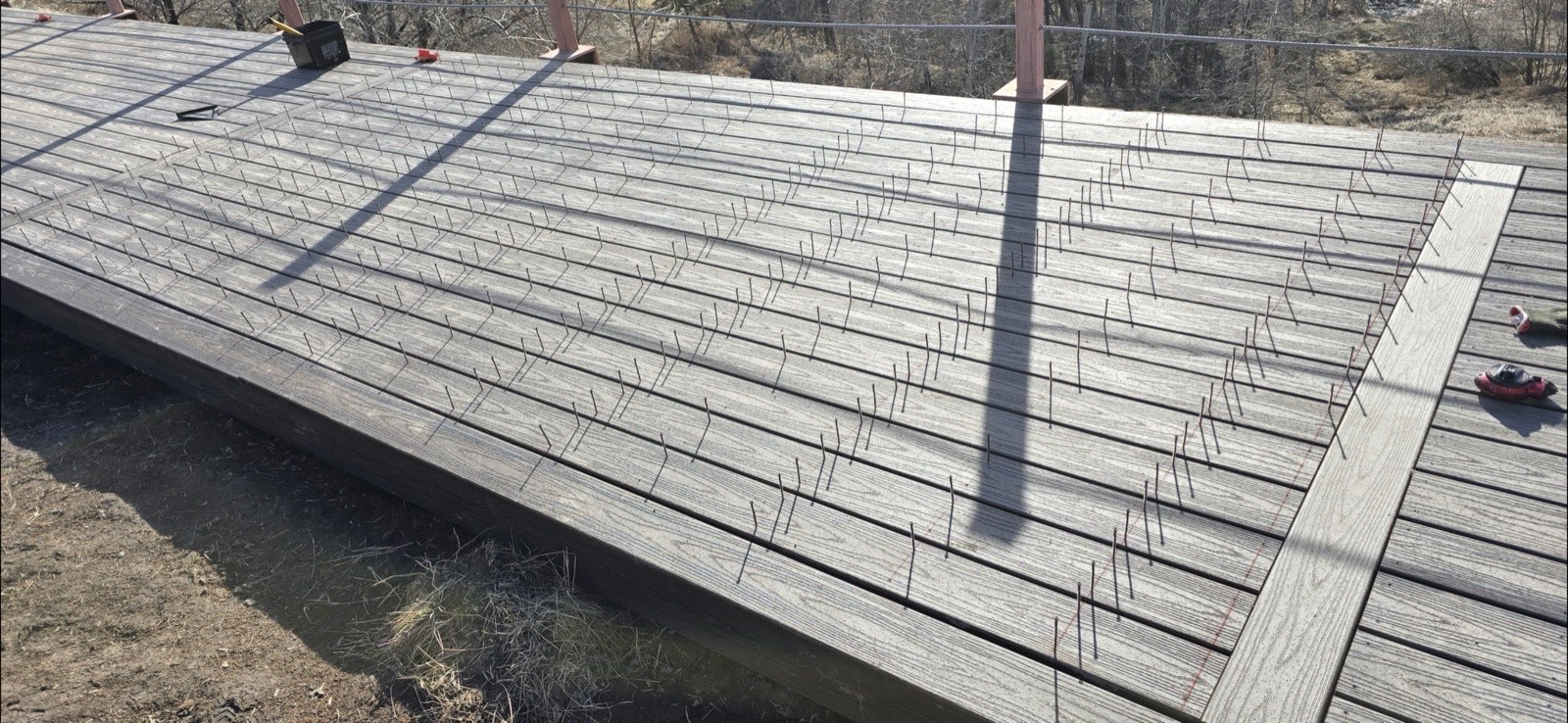
When a deck has to come down, the rebuild follows the same playbook as every new deck we put up:
- Tear-out and haul-off of the failed structure — all of it, not just the visible parts.
- New footings at least 3 feet deep, below the frost line, so this never happens to you twice.
- Proper framing with joist protection and rated structural hardware — not screws-and-hope.
- Your choice of surface — fir and larch wood or Trex composite, installed to spec.
What Homeowners With Failing Decks Ask Us
How do I know if my deck needs repair or a full rebuild?
Wobble, soft spots, shifting posts, warping boards, and rusted fasteners are the big five warning signs. Some are repairable. But shallow footings or screw-only framing are structural problems — repairing around them is just a bandage. We inspect and tell you straight either way.
Will you push a rebuild when a repair would do?
No. If it's repairable, we repair it — that's a verdict we give plenty of homeowners. If it's dangerous, we show you exactly why with the evidence in front of you. We'd rather lose the job than dress up a failing structure.
My deck is only a few years old. How can it already be failing?
Because of how it was built, not how old it is. We tore down a $31,000 deck that was less than a year old: footings barely a foot deep, soft pine, screws only. In Montana anyone can pay $125 and register as a contractor — no testing, no experience — and decks like that are the result. The full story is in Why Decks Fail in Montana.
What happens after the teardown?
New footings at least 3 feet deep, framing with joist protection and rated hardware, and the surface of your choice — wood or composite. Josiah checks the site multiple times a week until it's done.