Fence Builder in Kalispell & the Flathead Valley
A fence is a row of posts standing in Montana ground, fighting the same frost heave our decks do. We set them below the frost line with quality materials — so the straight line you pay for stays straight.
Every Crooked Fence in the Valley Has the Same Story
Drive any back road around here and you'll see them: fences that started straight and now wander like a dotted line. Posts leaning, rails sagging, gates that don't latch anymore.
It's not age. It's frost heave — the exact same physics that destroys shallow-footed decks. When a post is set shallow, the winter freeze gets underneath it and lifts. A little the first year. More the next. The ground here demands you go at least 3 feet down to get below the frost line, and most fence crews don't.
We do. It's the same rule we refuse to break on deck footings, because we've torn out what happens when it's skipped. Set the post below the frost line and the ground can't grab it. Set it shallow and the lean is just a matter of time.
Deck-Builder Standards, Applied to Your Fence Line
Posts Below the Frost Line
Every post set at least 3 feet down, below where the freeze can get underneath it. That's the difference between a fence that's straight at year ten and one that leans by year three.
Quality Materials
Wood stands in the weather every day of its life out here. We choose materials for this climate — the same philosophy that has us building decks with fir and larch instead of soft pine that warps.
Straight Lines That Stay Straight
Tight string lines, consistent spacing, square gates — and a foundation under each post that keeps it all where we put it. Built once, built right.
New Fence, or a Fence That's Giving Up?
- New fence builds — property lines, yards, privacy runs. Laid out clean, set deep, built square.
- Failing fence replacement — we'll tell you why it failed (almost always shallow posts or soft materials) and whether sections can be saved or the run should be rebuilt right.
- Part of a bigger project — plenty of our fence work rides along with a wood deck, siding, or framing job. One crew, one site, one standard.
Curious about the frost-heave physics behind all this? It's the same story we tell in Why Decks Fail in Montana — just standing vertical instead of lying flat.
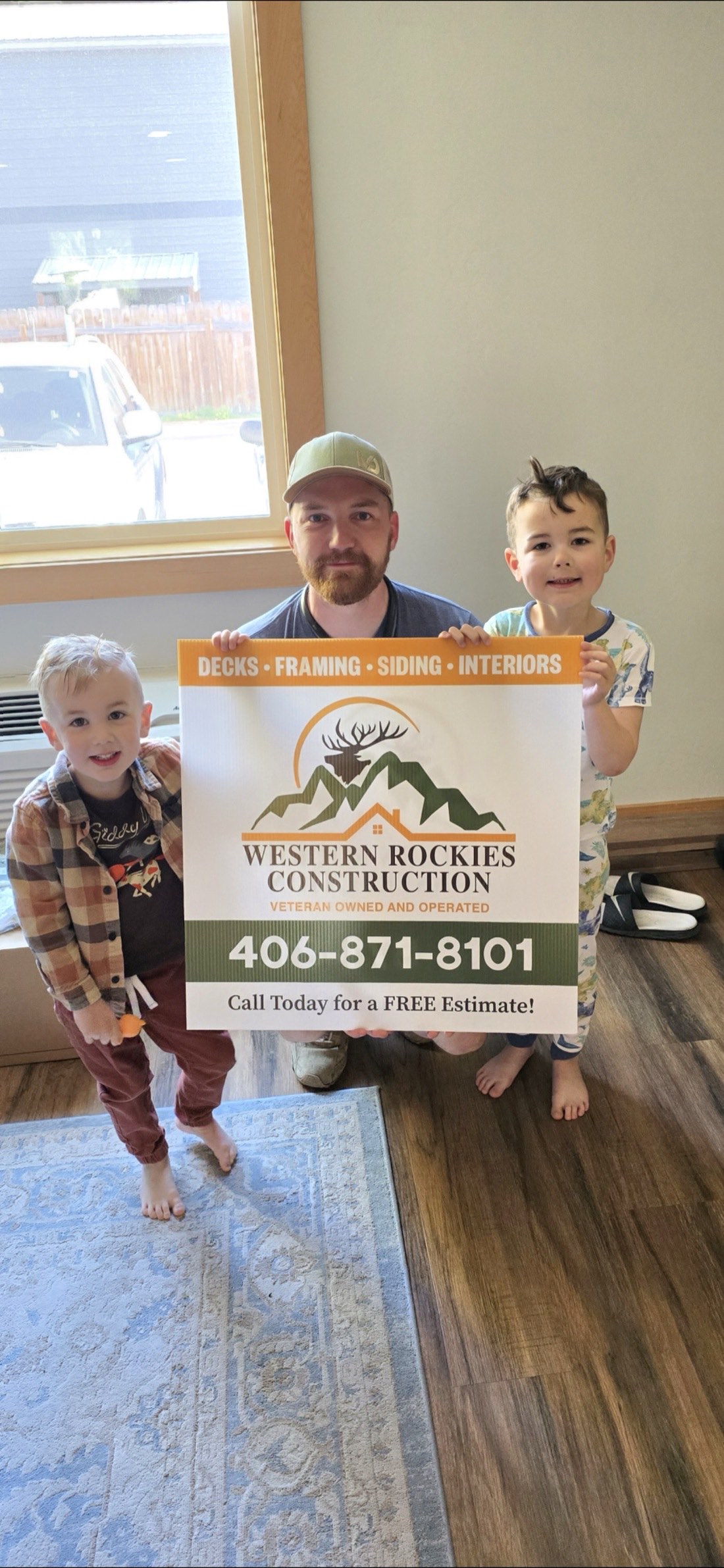
A Neighbor With a Level, Not a Stranger With a Lowball Bid
Josiah Walker grew up in this valley, served in the military, and now raises his own kids here. He does every bid himself, runs a full-time crew instead of subcontractors, and checks every active site multiple times a week.
In Montana, anyone can pay $125 and register as a contractor — no testing, no experience required. So ask whoever bids your fence how deep the posts go. The answer tells you everything.
What Homeowners Ask About Fences
Why do fence posts around here start leaning?
Frost heave. Shallow posts get lifted a little more every winter — the same physics that shifts shallow deck footings. Posts set at least 3 feet down, below the frost line, don't give the ground anything to grab.
What materials do you build fences with?
Quality materials chosen for this climate — same philosophy as our wood decks, where we use fir and larch instead of the soft pine that warps in freeze-thaw. A fence lives outside year-round; the material matters as much as the install.
Can you replace my failing fence?
Yes. We'll diagnose why it's failing — almost always shallow posts or soft materials — and give you a straight answer on whether sections can be saved or the run should be rebuilt right.
Why hire a deck builder for a fence?
Because a fence is posts in Montana ground holding structure against the weather — which is exactly what a deck is. Same frost line, same material logic, same crew, same owner checking the work.