Covered Decks & Outdoor Structures in the Flathead Valley
A roof over your deck turns a three-month deck into a most-of-the-year deck — usable in the rain, shaded in summer, sheltered when the snow flies. Built as one engineered structure, not an afterthought.
Stop Letting the Forecast Decide When You Use Your Deck
An uncovered deck in the Flathead Valley gets a short window. Snow sits on it through winter, spring rain keeps you inside, and by mid-July the afternoon sun makes it too hot to enjoy.
A covered deck changes the math. Dinner outside while it rains. Shade when July cooks everything else. A dry, sheltered spot when the snow starts early — or stays late. The roof also shields the decking and framing beneath it, so the deck itself ages slower.
Whether the surface below is Trex composite or a fir-and-larch wood build, the roof gets engineered into it as one structure.
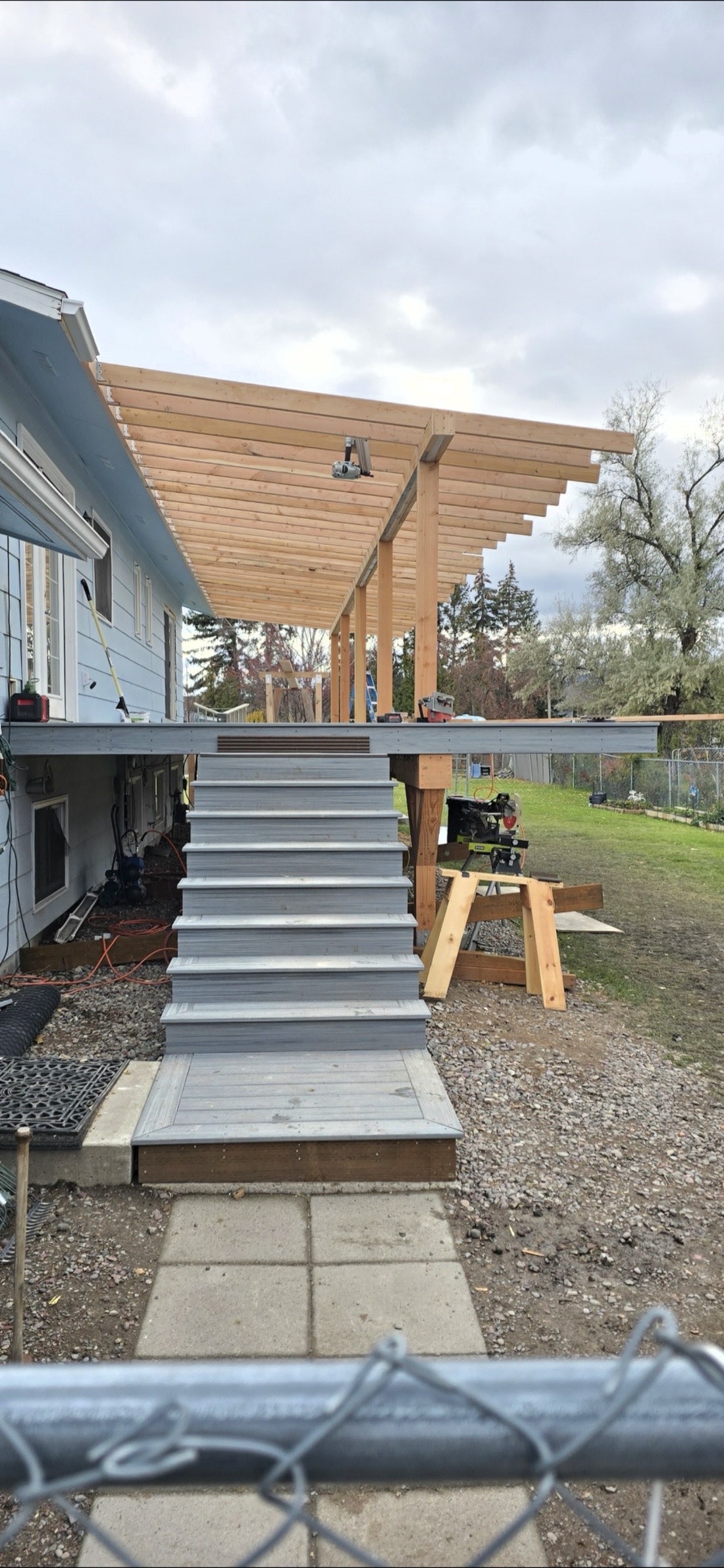
A Deck Roof in Montana Is a Structural Job
Snow doesn't care how nice the roof looks. It cares whether the framing was sized for the load.
Snow-Load Rated Framing
A deck roof here carries real snow for months. We size the roof framing for that load and fasten it with snow-load rated structural hardware — not just screws, which have near-zero shear strength.
Tied Correctly Into the Structure
The most common covered-deck failure is a roof bolted casually onto a frame that was never designed to hold one. We engineer the roof and deck as one system, with the loads carried all the way down.
Footings That Carry the Weight
A roof adds weight, and that weight lands on the footings. Ours go at least 3 feet deep — below the frost line — so frost heave can't shift a structure that's now holding up a roof too.
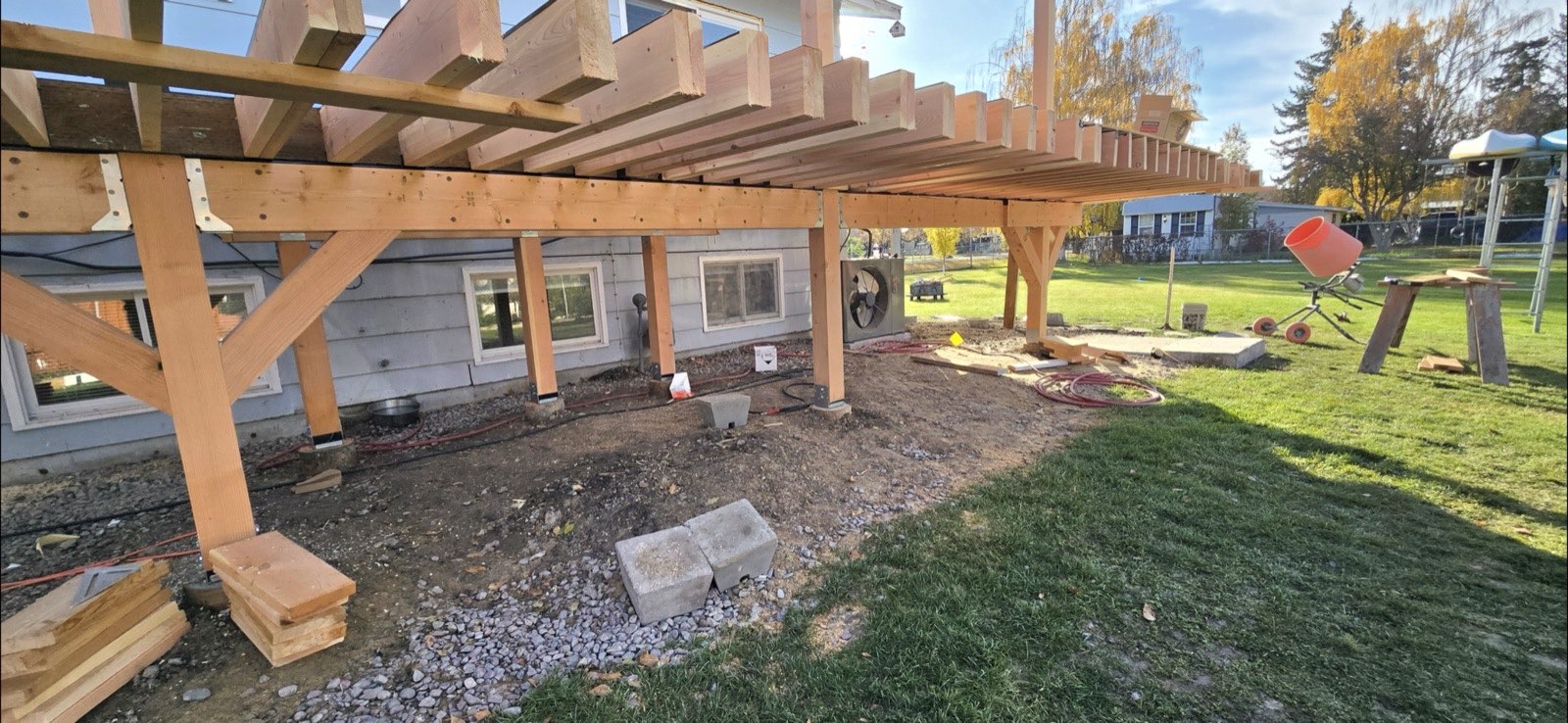
Outdoor Structures Built to the Same Standard
Covered decks are the most common request, but the same structural approach applies to the rest of your outdoor plans — timber structures, elevated decks, and the framing work that holds it all up.
- Roofed and covered decks — full weather protection, engineered for snow.
- Timber post-and-beam structures — the heavy, honest look that fits Montana homes.
- One crew, start to finish — structure, roof, and deck surface from the same hands, with the owner on site multiple times a week.
Wondering what separates a structure that lasts from one that doesn't? Start with Why Decks Fail in Montana.
What Homeowners Ask About Covered Decks
Can a covered deck handle our snow load?
Yes — if it's engineered for it, which is the whole job. The roof framing gets sized for months of sitting snow, tied correctly into the structure, and carried down to footings at least 3 feet deep. A roof bolted casually onto an existing frame is how covered decks fail.
Is a covered deck worth it here?
If you want more than a three-month deck season, yes. Usable in the rain, shaded in summer, sheltered from snow — and the roof protects the decking and framing underneath, so the whole deck ages slower.
Can you add a roof to my existing deck?
Sometimes. A roof adds real weight, so it depends on whether your footings and framing can carry it. We inspect first and give you a straight answer — and if the structure underneath is failing, our repair and rebuild crew handles that conversation honestly too.
Covered deck or pergola?
A pergola filters light; a roof keeps weather out — which here means carrying snow. That's a structural difference, not a cosmetic one, and it's why we build the roof and deck as one engineered system instead of stacking one on the other.